Le Creuset vs Staub (2026): Which Dutch Oven Is Worth It?
This post contains affiliate links. As an Amazon Associate, BuyerGuideLab earns from qualifying purchases — at no extra cost to you. It never changes a verdict. How we make money.
Le Creuset and Staub are the two most-recommended premium enameled cast iron brands, and both are made in France. They cost roughly the same and both last for decades. The real differences are inside the pot and under the lid — and they matter more than the colors.
Quick verdict: Choose Le Creuset if you cook a bit of everything — its light interior makes browning easy to judge. Choose Staub if you mostly sear and braise meat. On a budget? The Lodge 6-quart gets you most of the way there.
The contenders
- Winner for most cooksLe Creuset Signature 6.5-Qt Deep Round Dutch OvenCheck price →
- Winner for meat braisersStaub Essential French Oven, 5-QuartCheck price →
- Budget alternativeLodge 6-Quart Enameled Cast Iron Dutch Oven (EC6D43)Check price →
Le Creuset vs Staub: specs compared
| Le Creuset Signature 6.5 qt Deep | Staub Essential French Oven 5 qt | |
|---|---|---|
| Interior | Light sand, glossy enamel | Black, textured matte enamel |
| Lid | Smooth, tight-fitting | Heavy, with self-basting spikes |
| Oven rating | 500°F including knob | Pot 900°F, lid 500°F |
| Handles | Large loop handles | Smaller loop handles |
| Made in | France | France |
| Best at | All-round cooking, bread, soups | Searing and long braises |
Where they actually differ
Interior enamel: the biggest difference
Le Creuset’s light, glossy interior lets you see fond and onions change color, so you can pull them before they scorch. Staub’s black matte interior has a slightly rough texture that browns meat more aggressively and hides stains — but you judge doneness more by smell and timing.
Lid design
Staub’s lid has small spikes on the underside that collect condensation and drip it back onto the food. It’s a real advantage for long braises where you want meat to stay moist. Le Creuset’s smooth lid seals well too; for most soups and stews, the difference is small.
Handling and weight
Le Creuset’s larger handles are easier to grip with oven mitts, which matters when a full 6.5-quart pot weighs close to 20 pounds. Staub’s lid is heavier, which helps it seal but makes it more awkward to lift.
Cleaning and stains
A light interior shows every stain, though they’re cosmetic. Staub’s dark enamel looks new for longer. Both clean up with warm soapy water; avoid metal scouring pads.
Our picks

Le Creuset Signature 6.5-Qt Deep Round Dutch Oven
Best for: Everyday braising, soups and bread for a family of four — and anyone who wants the easiest enamel to cook on.
- 6.5 qt, deep round
- Light sand interior
- Oven & broiler safe to 500°F
- About 11.9 lb
- Made in France
- Lifetime limited warranty
What we like
- Light interior makes it easy to see browning and avoid scorching
- Knob is oven-safe to 500°F, so the lid can stay on for bread and braises
- Large, easy-grip handles — matters when the pot is full and hot
Watch out for
- The most expensive option here
- Light enamel shows stains over time (cosmetic only)
✓ Worth ItThe one to buy if it’s in your budget. It’s the easiest to cook in and built to last.
Check price on Amazon →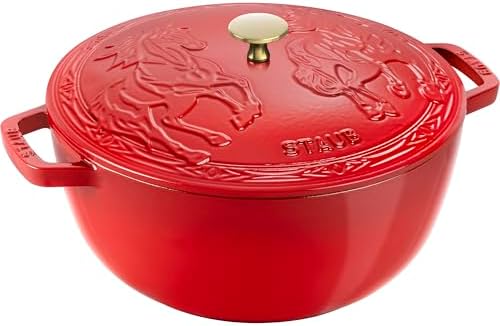
Staub Essential French Oven, 5-Quart
Best for: Cooks who brown meat hard and do long, low braises.
- 5 qt
- Black matte enamel interior
- Self-basting lid spikes
- Pot oven-safe to 900°F (lid 500°F)
- Made in France
What we like
- Textured matte interior browns meat better than glossy enamel
- Spikes under the lid drip condensation back onto food
- Dark interior hides stains
Watch out for
- Hard to judge browning of onions and fond on a black surface
- Heavier lid and smaller handles than Le Creuset
✓ Worth ItThe better pot for searing and braising; slightly less forgiving for everything else.
Check price on Amazon →
Lodge 6-Quart Enameled Cast Iron Dutch Oven (EC6D43)
Best for: First Dutch oven, bread baking and big batches on a budget.
- 6 qt
- Oven-safe to 500°F
- Stainless knob
- Induction compatible
- Made in China
What we like
- Full family size for a fraction of the premium price
- Knob and handles are oven-safe to 500°F
- Performs close to the premium brands for most braises and bread
Watch out for
- Enamel is more prone to chipping on the rim over years of heavy use
- Warranty support is less generous than Le Creuset’s
✓ Worth It80–90% of the experience for a fraction of the price. Treat the rim gently.
Check price on Amazon →Compare prices
Prices update automatically from Amazon.
The verdict
For most home cooks, Le Creuset wins on day-to-day ease: you can see what’s happening in the pot, the handles are easier to hold, and the lid knob is oven-safe to 500°F. If braised short ribs and coq au vin are your thing, Staub is the better tool.
Want to see Lodge in the mix? Read our best Dutch oven guide, or our full Le Creuset review.
Frequently asked questions
Is Staub or Le Creuset better?
Neither is better overall. Le Creuset is easier for all-round cooking thanks to its light interior and larger handles. Staub is better for searing and long braises thanks to its matte black interior and self-basting lid.
Why does Staub have a black interior?
The black matte enamel is slightly textured, which helps meat brown and hides staining. It needs no seasoning.
Are Le Creuset and Staub made in France?
Yes. The enameled cast iron Dutch ovens from both brands are made in France.
Is Le Creuset or Staub better for bread?
Both work. Le Creuset’s light interior makes it easier to check the bottom crust, and its knob is oven-safe to 500°F. Staub’s pot is rated higher than its lid, so check the lid rating for very hot bread recipes.
Is there a cheaper alternative to Le Creuset and Staub?
Lodge’s enameled Dutch ovens perform close to the premium brands for most braises and bread at a fraction of the price. The trade-off is enamel that’s more prone to chipping over years of heavy use.