Best Instant-Read Meat Thermometer (2026): Thermapen vs Budget Picks

As an Amazon Associate, BuyerGuideLab earns from qualifying purchases — at no extra cost to you. It never changes a verdict. How we make money.
An instant-read thermometer is the single biggest upgrade you can make to your cooking — and it costs less than a takeout dinner. No more cutting into chicken to check it, no more dry pork chops “just to be safe.”
Short answer
- Best value: TempPro (ThermoPro) TP19H Instant-Read
- Best premium: ThermoWorks Thermapen ONE
- Best for roasts & smoking: ThermoPro 2-in-1 Wireless + Instant-Read Set
Thermometers compared
| TempPro TP19H | Thermapen ONE | ThermoPro 2-in-1 | |
|---|---|---|---|
| Type | Instant-read | Instant-read | Wireless + instant-read |
| Speed | Fast | 1 second | Varies |
| Accuracy | ±0.9°F (per maker) | ±0.5°F | — |
| Waterproof | Yes | IP67 | — |
| Price tier | $ | $$$ | $$ |
Safe internal temperatures
| Food | USDA minimum |
|---|---|
| Chicken & turkey | 165°F |
| Ground beef & pork | 160°F |
| Beef, pork, lamb steaks & roasts | 145°F + 3-minute rest |
| Fish | 145°F |
How we judged these: we compared manufacturer specs, verified owner reviews and independent test data. We did not hands-on test every model — where a claim comes from the manufacturer, we say so. Product boxes show live Amazon prices. Our methodology →
The best meat thermometers

TempPro (ThermoPro) TP19H Instant-Read
Who should buy it: Almost every home cook — the cheapest way to stop overcooking meat.
- Instant read
- ±0.9°F accuracy (per maker)
- Auto-rotating backlit display
- Waterproof
- Magnetic back
What makes it different: Rotating backlit display, a lock button and motion-sensing wake at a budget price.
What we like
- Very low price
- Easy to read in any hand
- Waterproof for rinsing
Watch out for
- Slower and less rugged than a Thermapen
Alternative: Want the fastest, most durable option? See the Thermapen ONE.
✓ Worth ItThe best value in kitchen tools.
Check price on Amazon →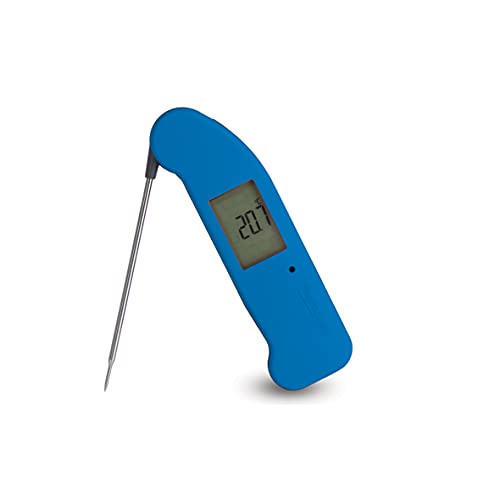
ThermoWorks Thermapen ONE
Who should buy it: Serious cooks, bakers and grillers who want the fastest, most accurate reading.
- 1-second readings
- ±0.5°F accuracy
- IP67 waterproof
- Auto-rotating backlit display
- 5-year warranty
What makes it different: One-second readings mean you check meat without losing heat from the grill or oven.
What we like
- Fastest reading of any pick
- Extremely durable
- 5-year warranty
Watch out for
- Several times the price of budget models
- Often sold out on Amazon — check availability
✓ Worth ItWorth it if you cook meat often.
Check price on Amazon →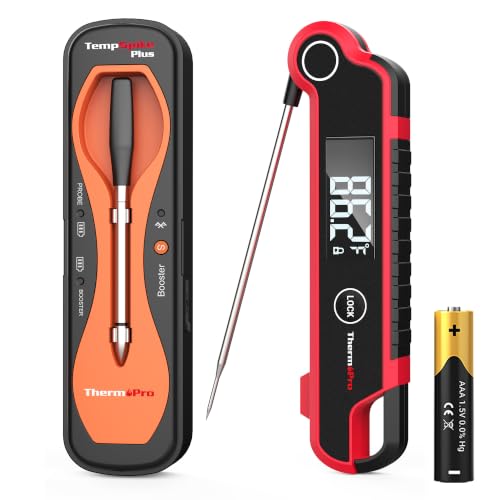
ThermoPro 2-in-1 Wireless + Instant-Read Set
Who should buy it: Cooks who roast, smoke or grill large cuts and want to monitor them from a distance.
- Wireless leave-in probe
- Instant-read thermometer included
- Long wireless range (per ThermoPro)
What makes it different: Leave the wireless probe in a roast and check it on the receiver, then spot-check with the instant-read.
What we like
- Two thermometers in one set
- Monitor long cooks without opening the oven
Watch out for
- More to charge and store
- Overkill for quick weeknight cooking
✓ Worth ItGreat if you smoke or roast often.
Check price on Amazon →The verdict
Start with the TempPro TP19H — it’s cheap and accurate enough for any home kitchen. Upgrade to the Thermapen ONE if you cook meat several times a week, and add the ThermoPro wireless set if you roast or smoke.
More essentials: kitchen essentials list.
The temperatures worth memorising
A thermometer is only as useful as the numbers you aim for. These are the ones that come up in a home kitchen, and they are the reason a fast probe pays for itself in a month of cooking.
| Food | Pull it at | Notes |
|---|---|---|
| Chicken and turkey | 165°F in the thickest part of the thigh | Breast meat stays juicier pulled at 160°F and carried over |
| Beef steak — medium rare | 130–135°F | Rest it; the centre climbs a few degrees off the heat |
| Beef roast — medium | 140°F | Pull 5°F early for carryover on a large joint |
| Pork chops and loin | 145°F | Long-outdated advice says 160°F, which is why pork has a dry reputation |
| Ground meat | 160°F | Grinding spreads surface bacteria through the meat |
| Salmon | 125–130°F | Firm and flaky by 145°F, which most people find overdone |
| Bread | 190–210°F in the centre | The only reliable way to know a loaf is baked through |
| Frying oil | 350–375°F | Below this, food absorbs oil instead of crisping |
| Custard | 170–175°F | Above 180°F it scrambles |
What the expensive probes actually buy
Speed. A premium probe reads in two to three seconds; a cheap one takes six to ten. That sounds trivial until you are holding an oven door open over twelve chicken thighs, losing heat with every second.
Accuracy and calibration. Good probes state a tolerance, typically ±0.5°F, and let you recalibrate. Cheap ones state nothing and drift over time, which is worse than useless because you trust a wrong number.
Waterproofing. The most common way a thermometer dies is a wet hand or a sink. An IP-rated body is the difference between a tool that lasts five years and one that lasts one.
Build details. A thin tip that leaves a smaller hole, a probe that rotates to any angle, a backlit display that flips, and a magnet for the extractor hood. None of these change the reading; all of them decide whether you reach for it.
Where to put the probe
Aim for the thickest part, away from bone, fat and the pan, and push through to the centre then draw slowly back — the lowest reading you pass through is the true centre. On thin cuts, go in from the side rather than the top. On a whole bird, check the inner thigh, not the breast.
Honest buying advice: a mid-priced probe that reads in three seconds and states its accuracy does 95% of what the famous expensive one does. What you cannot compromise on is a stated tolerance and a waterproof body.
Frequently asked questions
Do I really need a meat thermometer?
Yes. It is the only reliable way to know meat is safely cooked without overcooking it.
Is the Thermapen worth it?
If you cook meat often, yes: it reads in about one second, is very accurate and comes with a 5-year warranty. For occasional use, a budget instant-read is enough.
Where do I put the thermometer?
In the thickest part of the meat, away from bone and fat.
Instant-read or leave-in thermometer?
Instant-read for quick checks on steaks and chicken. Leave-in or wireless for roasts and smoking, where you want to monitor the temperature without opening the oven.
What temperature should chicken be cooked to?
165°F in the thickest part of the thigh. Breast meat is juicier pulled at about 160°F and left to carry over while it rests.
Are expensive instant-read thermometers worth it?
They buy speed, a stated accuracy tolerance, recalibration and waterproofing. A mid-priced probe that reads in about three seconds does most of the job; avoid any that does not state its accuracy.
Where should you put a meat thermometer?
In the thickest part, away from bone and fat. Push past the centre and draw back slowly — the lowest temperature you pass through is the true middle.
How accurate should a kitchen thermometer be?
Look for a stated tolerance of around ±1°F or better, and the ability to recalibrate. A probe that drifts and cannot be corrected is worse than no thermometer.