Non-Stick Pan Failing Early? Here’s Why (And How to Avoid It)
As an Amazon Associate, BuyerGuideLab earns from qualifying purchases — at no extra cost to you. It never changes a verdict. How we make money.
If your nonstick pan started sticking after six months instead of the two to four years it should last, it’s rarely bad luck. It’s usually one of a handful of habits that strip the coating early — and they’re easy to fix.
Why nonstick pans fail early
| Cause | What happens | The fix |
|---|---|---|
| Metal utensils | Micro-scratches that spread with every use | Wood, silicone or nylon only |
| High heat | Coating breaks down chemically | Medium heat max; sear in stainless |
| Cooking spray | Sticky residue builds up and looks like coating failure | A little oil or butter instead |
| Dishwasher | Harsh detergent wears the coating | Hand-wash with a soft sponge |
| Thermal shock | Cold water on a hot pan warps it | Let the pan cool first |
| Stacking | Other pans scratch the surface | Use pan protectors or hang it |
Can you fix a pan that already sticks?
If the sticking is residue from cooking spray, scrub gently with baking soda paste and a soft sponge — release often comes back. If the coating is visibly scratched, peeling or flaking, replace the pan.
How we judged these: we compared manufacturer specs, verified owner reviews and independent test data. We did not hands-on test every model — where a claim comes from the manufacturer, we say so. Product boxes show live Amazon prices. Our methodology →
What to buy (and what to change)

Teak Wooden Utensil Set (7 pieces)
Who should buy it: Anyone still using metal spatulas on nonstick.
- Solid teak
- 7 pieces with holder
What makes it different: Wood won’t scratch nonstick coatings — the single cheapest way to make a pan last longer.
What we like
- Protects every coated pan you own
- Inexpensive
Watch out for
- Hand-wash wood; don’t soak
Alternative: Silicone utensils work just as well.
✓ Worth ItThe cheapest fix on this page.
Check price on Amazon →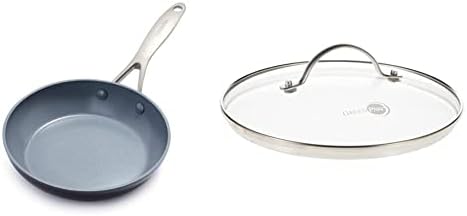
GreenPan Valencia Pro 8″ Ceramic Fry Pan
Who should buy it: Replacing a failed egg pan with a PFAS-free option.
- Ceramic nonstick, PFAS-free
- Hard-anodized
- Oven-safe to 600°F
- Induction
What makes it different: A PFAS-free pan with an unusually high oven rating for ceramic.
What we like
- No PFAS
- Works on induction
Watch out for
- Ceramic release fades sooner than PTFE — treat it gently
✓ Worth ItOur pick for a PFAS-free egg pan.
Check price on Amazon →
T-fal Ultimate Hard Anodized 12″ Fry Pan
Who should buy it: Cooks who want easy release that lasts, at a low price.
- Titanium-reinforced PTFE
- Thermo-Spot preheat indicator
- Oven-safe to 400°F
- Not induction
What makes it different: A heat indicator shows when the pan is preheated, which helps you avoid the overheating that ruins coatings.
What we like
- Affordable
- Long-lasting release
Watch out for
- PTFE (not PFAS-free)
- No induction
✓ Worth ItThe best value in classic nonstick.
Check price on Amazon →
Tramontina Tri-Ply 12″ Stainless Fry Pan
Who should buy it: Searing steaks and anything that needs high heat.
- Tri-ply stainless
- Oven-safe to 500°F
- Induction
- Lifetime warranty
What makes it different: Moving high-heat cooking to stainless is what really saves your nonstick pan.
What we like
- Handles any heat
- Lasts decades
Watch out for
- Needs preheating and fat to avoid sticking
✓ Worth ItThe pan that takes the abuse off your nonstick.
Check price on Amazon →The bottom line
Most nonstick failures are caused by metal tools, high heat and the dishwasher. Switch utensils, keep nonstick for eggs and delicate food, and do high-heat cooking in stainless or cast iron. Your next pan will last years instead of months.
More: ceramic vs nonstick vs stainless and what PFAS-free means.
The five things that kill a non-stick coating
Coatings rarely fail on their own. In almost every case one of these five did it.
1. Heat above medium. The biggest one by far. Coatings are stable at cooking temperatures and degrade quickly above them. An empty pan on a high burner passes 500°F in two to three minutes.
2. Aerosol cooking spray. Lecithin and propellants bake into an invisible, sticky varnish that is not removable and makes the pan behave as though the coating has failed. It is the most common hidden cause.
3. The dishwasher. Detergent is abrasive and alkaline. Even “dishwasher safe” pans lose years to it.
4. Metal utensils and stacking. Scratches from tools, and from pans stacked inside each other, break the surface. Use pan protectors or a rack.
5. Thermal shock. A hot pan under a cold tap warps the base, and a warped pan heats unevenly, which cooks the coating in hot spots.
How to get five years out of a coated pan
Preheat on medium for a minute or two with fat already in it. Cook on medium. Let it cool on the hob before washing. Wash by hand with a soft sponge. Use silicone, wood or nylon. Store it with a cloth or protector between pans. Buy a heavier pan with a thick base — thin pans warp, and a warped pan is a dead pan. That is the whole method, and it roughly doubles the life of any coated pan.
When to stop using it
Replace it when the coating is visibly scratched through, flaking, blistered or chalky. An intact but tired coating is safe and simply annoying; a damaged one is the point at which the pan should go. Do not try to strip or re-season a failed non-stick coating — unlike cast iron, there is nothing to rebuild.
Realistic expectation: a coated pan is a consumable, not an heirloom. Three to five years with careful use, two with careless use. Plan for it, buy a mid-priced pan rather than an expensive one, and keep a stainless or cast iron pan for everything that needs real heat.
Frequently asked questions
How long should a nonstick pan last?
With good care, traditional PTFE nonstick usually lasts several years and ceramic a little less. Metal utensils, high heat and dishwashers shorten that a lot.
When should I throw out a nonstick pan?
When the coating is visibly scratched, peeling or flaking, or food sticks even after a gentle deep clean.
Can I use cooking spray on nonstick?
It is better not to. Aerosol sprays leave a residue that builds up and ruins food release.
Is it safe to use a scratched nonstick pan?
Most guidance says to replace pans once the coating is damaged or flaking.
Why did my non-stick pan stop working so quickly?
Usually heat above medium, aerosol cooking spray building a varnish, the dishwasher, metal utensils, or warping from a hot pan hitting cold water.
How long should a non-stick pan last?
Three to five years with careful use, about two with careless use. Coated pans are consumables — the coating cannot be rebuilt once it fails.
When should you throw away a non-stick pan?
When the coating is scratched through, flaking, blistered or chalky. A tired but intact surface is safe to keep using.
Can you restore a non-stick pan?
No. Unlike cast iron, there is no seasoning to rebuild. Once the coating is damaged, the pan needs replacing.